
The banned apps include Baidu, Baidu Express Edition, Tencent Watchlist, FaceU, WeChat Reading and Tencent Weiyun, besides PUBG Mobile and PUBG Mobile Lite, according to an official statement.

The government, however, dismissed allegations of any kind of surveillance on its part on specific people, saying it 'has no concrete basis or truth associated with it whatsoever'.

The standoff between the government and the opposition in Parliament has showed no signs of easing after it erupted on the opening day of the Monsoon session on July 19.
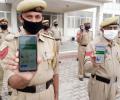
'When a person is capable of infecting 50 others, will you think about the privacy of the person or about protecting the lives of people?'
The exponential number of downloads can be attributed to a call by Prime Minister Narendra Modi, asking people to have the app on their mobiles, combined with the government's push for downloading of the app through other channels, reports Neha Alawadhi.

Tiktok and Helo in a joint statement said they have plans to invest $1 billion over the period of next three years to develop technology infrastructure and owns responsibility of local community.

'Information highways are getting stronger and being strengthened.' 'Occasionally, accidents could occur. But do you stop constructing highways because two motor cars collide?'

Aadhaar-related schemes and the Aadhaar Act exist on the assumption that Right to Privacy is not a Fundamental Right.

The National Technical Research Organisation, the ambitious project to protect India's cyber space, is all set to roll out in May. However, experts are sceptical on how the government will maintain a balance between cyber security and civil liberties, reports Vicky Nanjappa.

People familiar with the proceedings said independent cybersecurity experts from a private consulting firm, technology lawyers, government officials and WhatsApp representatives were asked questions about the Pegasus spyware and the larger issues surrounding surveillance, hacking and remedial measures.

The parliamentary committee on IT has recently been in the news for asking global representatives of Twitter, Facebook, WhatsApp and Instagram to present their views on misuse of social media platforms and its impact on citizens.

Beware, it's not just criminals who want your data!

Absence of comprehensive data protection and privacy laws will be barriers in the government's digitalisation drive.

Unlike the race to buy airwaves by telecom companies, airports by infrastructure companies and city gas networks by energy companies, the race to develop super apps by consumer-facing companies in India has not brushed up against any regulatory issues. Officials at the ministry of electronics and information technology and at other regulators are happy they do not have to meddle in who among the Tata group, Reliance Industries Ltd, Flipkart or Paytm will manage to build an app that sweeps in customers. Unlike separate apps a customer uses on her mobile to order groceries, buy food or airline tickets or just make payments, a super app can perform all these functions.

The need of the hour, as the Supreme Court readies to rule on the constitutionality of Aadhaar, is for the UIDAI to fix the bugs, says Geetanjali Krishna, in the second and final part of her series.

Unless the judges factor in the ungovernability of technologies and their beneficial owners, present and future Presidents, prime ministers, judges, legislators and officials handling sensitive assignments may become redundant with reference to their age-old roles for securing 'national resources and assets', warns Dr Gopal Krishna.

The judgment was reserved after a marathon hearing which went on for 38 days spanning four months.

Kiran Mazumdar-Shaw points out how the adoption of information and communication technologies can provide India with a very effective health care tool.

Extension of the deadline from December end this year till March 31, 2018, would apply only to those people who do not have Aadhaar and are willing to enrol for it.

The Bill says that the central government, in consultation with the Data Protection Authority, can direct any data fiduciary or data processor to provide non-personal data to enable better targeting of delivery of services. The government can also ask data processors to provide data for formulation of evidence-based policies for its own use.
Biometric authentication is based on the unscientific and questionable assumption that there are parts of human body that does not age, wither and decay with the passage of time.
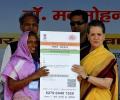
Aadhaar now has legal backing but it still faces challenges of privacy and data sharing

The Swadeshi Jagaran Manch has pointed out that these firms pose a threat to domestic manufacturing and retailing as they do not pay relevant taxes such as GST, giving them a huge edge over local players.

'It has taken bombings in Beirut, bombing of a Russian airliner and now terror attacks in Paris for people to realise that we are not going to achieve our objectives of destroying ISIS if we drive in second gear. We need to get into top gear.'

There are unprecedented political implications of identification based on 'biological attributes of an individual', such as employed by Aadhaar, warns Gopal Krishna.

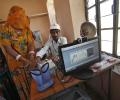
The DoT is wrongly asking subscribers to link their mobile numbers to Aadhaar in order to keep them active, says Gopal Krishna.

Cashless transactions need ubiquitous connectivity, which we don't have. And connectivity needs political and administrative convergence, says Shyam Ponappa.

Isn't National Intelligence Grid and UIDAI engineered by vested interests, asks Gopal Krishna.

Like China, India needs to encourage 'hacker clubs' in view of the challenges of virtual terrorism, says Lieutenant General Prakash Katoch (retd)
 © 2026 Rediff.com - Advertise with us - Disclaimer - Privacy Policy - Sitemap - Feedback - About us - Terms of use - Grievances